50 Creative Writing Prompts for Kids: The Ultimate Guide for Parents, Teachers & Homeschool Families
Creative writing prompts for kids are open-ended questions and story starters that help children develop imagination, confidence, vocabulary, storytelling, and communication skills. They work well for elementary and middle school students in homeschool, classrooms, co-ops, and family learning. Below you’ll find 50 free prompts plus practical tips for making writing enjoyable to help your child become a confident, independent writer in just 10–15 minutes a day.
This Guide Is Perfect For
✓ Homeschool families
✓ Elementary teachers
✓ Middle school teachers
✓ Parents of reluctant writers
✓ Christian schools
✓ Homeschool co-ops
✓ Tutors
✓ Gifted learners
✓ Libraries
✓ Summer learning

Before children become writers, they are wonderers.
They invent imaginary friends, ask impossible questions, build worlds from blankets, and tell stories that adults could never imagine. Long before they write their first paragraph, they’re already creating.
Somewhere along the way, many children begin believing writing is about getting the “right answer.”
But creativity doesn’t begin with perfect grammar.
It begins with wonder.
Every child has stories worth telling. Some children dream up magical kingdoms while building forts in the living room. Others invent elaborate adventures for their stuffed animals, wonder what life would be like on another planet, or ask endless “what if?” questions about the world around them. Yet, when it’s time to write those ideas down, many children suddenly stare at a blank page.
“I don’t know what to write.”
“I don’t have any ideas.”
“I don’t think I’m good at writing.”
If you’ve ever heard these words, you’re not alone.
One of the biggest obstacles to writing isn’t grammar, spelling, or handwriting. It’s simply getting started.
That’s where creative writing prompts can make all the difference.
A thoughtfully chosen prompt removes the pressure of finding the “perfect” idea and replaces it with something much more powerful: curiosity.
Instead of asking children to fill out another worksheet or answer questions with one correct response, creative writing prompts invite them to imagine, wonder, explore, and create. There is no single right answer. Every child’s response is unique because every child brings different experiences, interests, and perspectives to the page.
That freedom is what makes creative writing such an important part of a child’s education.
Whether you’re a parent looking for meaningful writing activities at home, a homeschool family building a language arts routine, a classroom teacher searching for engaging morning work, or an educator hoping to inspire reluctant writers, creative writing prompts offer a simple but effective way to build confidence while making writing enjoyable.
In this guide, you’ll discover fifty open-ended creative writing prompts for elementary and middle school students, along with practical ideas for using them in homeschool, classrooms, co-ops, tutoring sessions, and family learning. You’ll also learn why creative writing supports much more than writing itself—it strengthens communication, problem-solving, observation, empathy, and imaginative thinking.
If your goal is to help children enjoy writing instead of simply completing assignments, you’re in the right place.
What Are Creative Writing Prompts?
Creative writing prompts are open-ended questions, scenarios, or story starters designed to spark imagination and encourage children to express their own ideas through writing.
Unlike traditional writing assignments that often focus on facts or correct answers, creative prompts encourage exploration. They invite children to invent characters, imagine new worlds, describe experiences, solve fictional problems, and communicate thoughts in their own unique voice.
For example, instead of asking a child to summarize a story they read, a creative prompt might ask:
- What if your shadow had a personality of its own?
- Imagine discovering a tiny hidden door in your bedroom wall. Where does it lead?
- If animals suddenly learned to read, what would happen next?
Notice that there isn’t a single correct response. One child might write a humorous story. Another might create a mystery. Another might write a thoughtful reflection. Each response is valid because creative writing values originality over perfection.
This freedom often helps children discover that writing can be enjoyable rather than intimidating.
Benefits of Creative Writing in Kids
Many people think creative writing simply teaches children how to write stories.
In reality, it develops a much broader set of skills that benefit children throughout their education—and beyond.
1. Daily Creative Writing Practice Builds Confidence
A blank page can feel overwhelming, especially for children who worry about making mistakes.
Creative prompts provide just enough direction to get started while leaving plenty of room for individual ideas. Instead of wondering what to write, children can focus on how they want to express themselves.
Over time, this helps build confidence and reduces the fear of being “wrong.”
2. Creative Writing Strengthens Critical Thinking in Children
Although creative writing is imaginative, it also requires reasoning.
Children naturally ask themselves questions such as:
- What would happen next?
- Why would my character make that choice?
- How would this problem be solved?
- What would this place look like?
These decisions strengthen planning, sequencing, and problem-solving skills.
3. Creative Writing Expands Vocabulary
The more children write, the more language they naturally experiment with.
As they search for better ways to describe a dragon’s cave, a thunderstorm, or a mysterious inventor, they begin using richer vocabulary without memorizing long word lists.
4. Creative Writing Encourages Observation in Authors
Great writers notice details.
Creative writing encourages children to pay closer attention to the world around them:
- colors
- sounds
- textures
- emotions
- nature
- conversations
- people’s expressions
Observation is one of the most important habits for both writers and lifelong learners.
5. Creative Writing Develops Empathy
Stories invite children to see the world through someone else’s eyes.
When children imagine being:
- a lonely giant
- an astronaut
- a frightened squirrel
- an elderly neighbor
- a talking tree
they practice perspective-taking, an important part of emotional intelligence.
6. Creative Thinking Makes Writing Feel Enjoyable
Perhaps most importantly, creative writing helps children associate writing with curiosity rather than pressure.
When children look forward to writing, they naturally write more often.
And children who write regularly almost always become stronger writers over time.
The Research Behind Creative Writing
Research in literacy and education consistently shows that regular writing practice supports children’s overall language development.
Creative writing can help strengthen:
- written communication
- reading comprehension
- vocabulary development
- organization of ideas
- narrative structure
- memory
- creative problem-solving
- confidence expressing opinions
Open-ended writing activities may also encourage intrinsic motivation because children have meaningful choices about what they write rather than simply completing predetermined answers.
For homeschool families and classroom teachers alike, this makes creative writing an excellent complement to structured language arts instruction.
Why Open-Ended Prompts Work So Well
Many children dislike writing because they’re worried about getting the answer wrong.
Open-ended prompts remove that fear.
Instead of asking:
“What happened in chapter three?”
they ask:
“What would happen if your favorite character visited your neighborhood?”
Instead of asking:
“Write five facts about butterflies.”
they ask:
“If butterflies could carry messages around the world, what would yours say?”
Children become active creators instead of passive responders.
That shift changes writing from a task into an opportunity.
Creative Writing Prompts for Teachers: Classroom Ideas That Save Time and Inspire Students
Creative writing prompts are one of the most flexible tools a teacher can add to a classroom. Because they’re open-ended, they work with a wide range of ages, abilities, and learning styles while encouraging every student to participate at their own level.
Teachers use creative writing prompts in countless ways, including:
- Morning work
- Bell ringers
- Writing workshop warm-ups
- Literacy centers
- Language arts instruction
- Fast finisher activities
- Independent work
- Small-group instruction
- Early intervention
- Gifted enrichment
- Social-emotional learning (SEL)
- Creative homework
- Summer learning programs
- Substitute teacher plans
- Homeschool co-ops
- Library programs
Unlike worksheets that often have one correct answer, creative writing prompts encourage students to think independently, communicate ideas, and build confidence with writing.
Because every child responds differently, teachers can use the same prompt across multiple grade levels while allowing students to write at an appropriate level for their age and ability.
Designed with Busy Educators in Mind
Creative WonderPrompts was created to reduce planning time while making writing more engaging.
Whether you’re teaching one child or an entire classroom, the journals provide a thoughtfully sequenced experience that’s ready to use.
Schools and educators can choose the format that works best for their students:
- Beautiful keepsake-quality hardcover journals
- Large-format, child-friendly softcover journals that are comfortable to write in
- Instant PDF downloads for individual families
- Classroom and organizational digital licensing
- Discounted bulk pricing for schools, homeschool co-ops, microschools, churches, tutoring centers, and educational organizations
If you’re interested in classroom sets or organization-wide licensing, we’d love to work with you to find an option that fits your budget.
Learn more about educational licensing and bulk discounts here:
When You’re Ready for a More Guided Writing Experience
Free creative writing prompts are a wonderful place to begin. They spark ideas, encourage imagination, and help children overcome the challenge of the blank page.
But many parents and educators eventually begin looking for something more than a collection of prompts.
They want a resource that helps children develop a consistent writing habit, gradually build confidence, and experience creativity through a thoughtful, age-appropriate progression.
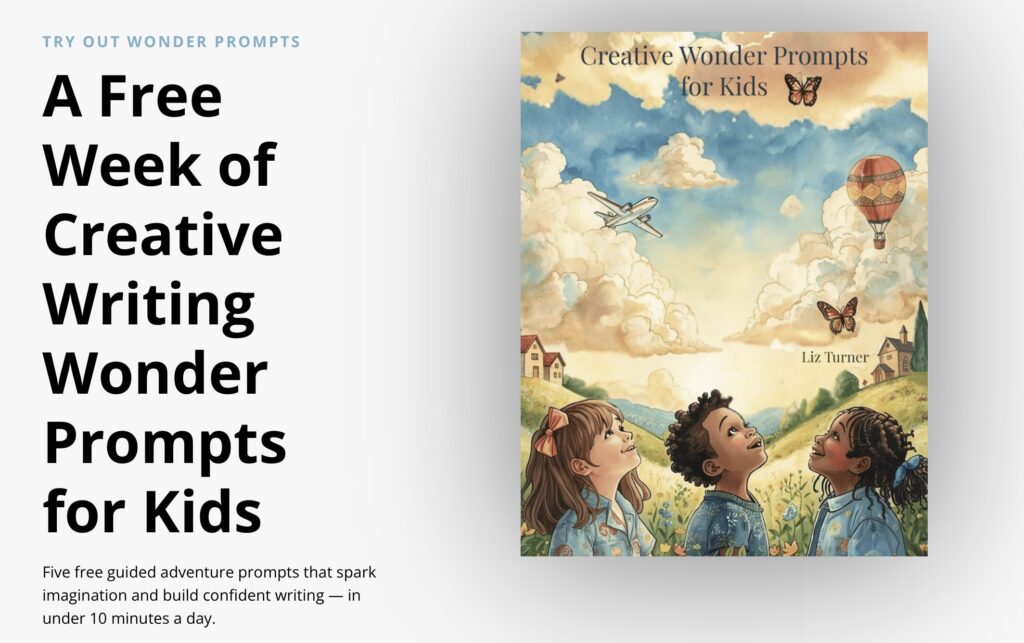
That’s why we created Creative Wonder Prompts for Kids.
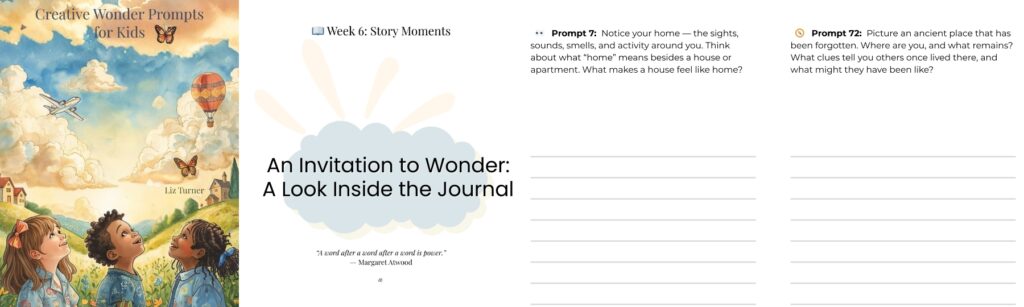
Instead of presenting unrelated prompts, the journal guides children through a carefully designed thirteen-week journey of observation, imagination, storytelling, reflection, and creative expression.
Each week focuses on a creative theme, and each day gently builds upon the last through our Wonder rhythm:
- Notice
- Imagine
- Describe
- Tell a Story
- Reflect
- Express
- Integrate
The result is a writing experience that feels calm, approachable, and enjoyable rather than overwhelming.
Children aren’t simply filling pages—they’re developing habits of curiosity, creativity, and thoughtful expression that can last a lifetime.
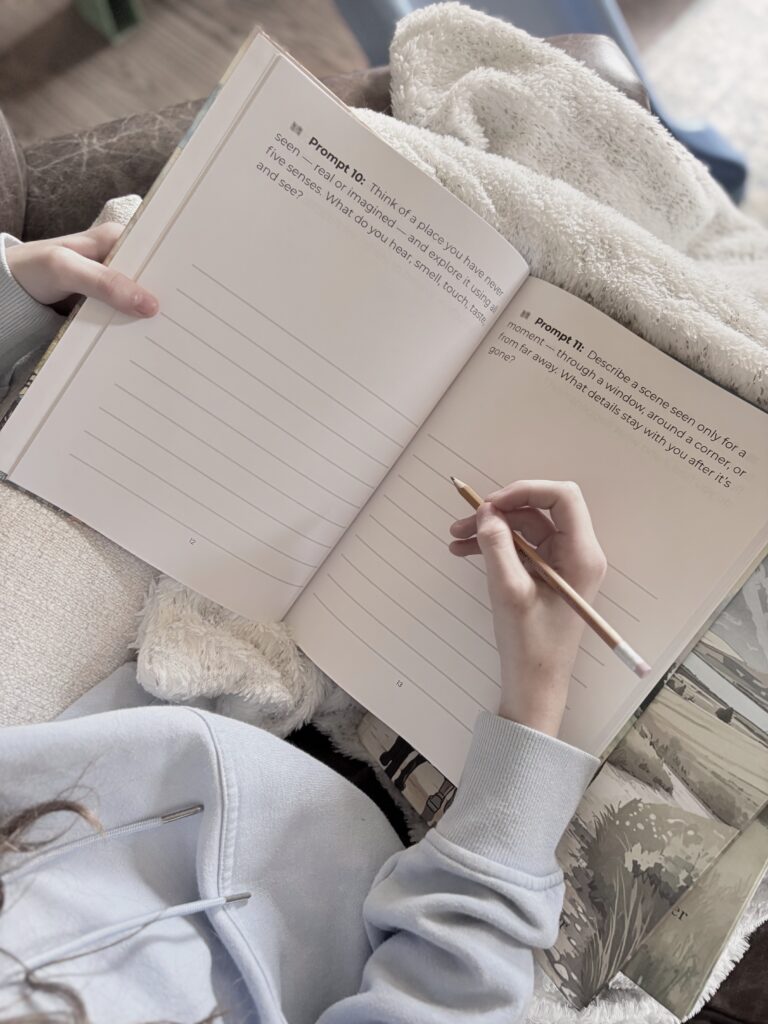
Why Families and Teachers Love Creative Wonder Prompts
Creative Wonder Prompts was intentionally designed to feel different from a traditional workbook.
Instead of crowded pages and lengthy assignments, children enjoy a spacious, inviting layout that encourages thoughtful writing without feeling intimidating.
Families and educators can choose the format that best fits their needs:
- Keepsake Hardcover – Beautiful enough to preserve as a lasting record of a child’s creativity and growth.
- Large Child-Friendly Softcover – Spacious pages designed with young writers in mind, making writing more comfortable and enjoyable.
- Instant PDF Download – Begin writing immediately at home.
- Digital Classroom Licensing – Flexible options for schools, classrooms, homeschool co-ops, tutoring programs, and educational organizations.
- Bulk Physical Orders – Discounted pricing available for classrooms, schools, churches, and educational groups.
Whether you’re purchasing for one child or hundreds of students, Creative WonderPrompts makes it easy to create meaningful writing experiences without hours of lesson planning.
Introducing Creative Wonder Prompts for Kids
Many prompt books simply provide a list of writing ideas.
Creative Wonder Prompts for Kids was designed differently.
Rather than offering random prompts, the journal guides children through a thoughtfully structured thirteen-week journey that helps creativity become a daily habit.
Each week explores a creative theme such as observation, imagination, storytelling, emotions, nature, or creative expression.
Each day then approaches that theme through a gentle rhythm that encourages children to slow down and think deeply:
- Notice something interesting.
- Imagine new possibilities.
- Describe ideas with rich details.
- Tell a story inspired by those ideas.
- Reflect on thoughts and experiences.
- Express creativity through writing or drawing.
- Integrate everything learned through reflection or artistic expression.
This simple rhythm helps children move beyond “What should I write?” and into a consistent creative practice that feels inviting rather than overwhelming.
Because sessions are intentionally short and approachable, they’re ideal for homeschool families, classrooms, co-ops, independent learners, and even reluctant writers.
Unlike many writing workbooks that focus primarily on mechanics, Creative WonderPrompts is designed to nurture imagination first—because children who enjoy writing are more likely to keep writing.
50 Creative Writing Prompts for Kids
These prompts are appropriate for many elementary and middle school students and can be adapted for different ages. Encourage children to write, draw, dictate, or discuss their ideas depending on their developmental stage.
Imagination & Adventure
1. You discover a tiny hidden door inside your bedroom wall. Where does it lead?
Imagine what you find when you step through. Who—or what—is waiting for you on the other side?
2. Every animal wakes up able to speak one morning. What is the very first conversation you have?
3. You find a backpack that grants one magical ability each day. What happens during the first week?
4. A map appears in your mailbox with an X marking a place you’ve never heard of. Where does it lead?
5. You wake up one morning able to fly—but only until sunset. How do you spend the day?
6. A friendly dragon moves into your neighborhood. What surprises everyone about your new neighbor?
7. Imagine a city built entirely in the treetops. What would daily life be like there?
8. You discover an old key that unlocks something no one else can see. What does it open?
9. Every time you sneeze, you travel somewhere unexpected. Where do you end up?
10. If you could invent one new season, what would it be like?
Nature & Discovery
Nature has always inspired great writers. These prompts encourage children to slow down, observe the world around them, and imagine what might exist just beyond what they can see.
11. You discover a flower that blooms only under the light of the full moon. What makes it so special?
12. Imagine spending one entire day as your favorite bird. Where do you go? What do you notice from the sky?
13. If mountains could share stories from the past, what story would your favorite mountain tell?
14. You discover a tiny village built beneath the roots of an old oak tree. Who lives there?
15. What would happen if rivers could choose where they wanted to flow?
16. Imagine finding a shell on the beach that whispers memories from the ocean.
17. You discover a new kind of tree that grows something unexpected instead of fruit. What grows on its branches?
18. If clouds were living creatures, how would they spend their days?
19. What would a conversation between the sun and the moon sound like?
20. Imagine discovering an animal no scientist has ever seen before. Describe it so carefully that someone else could picture it perfectly.
Mystery & Wonder
Mysteries naturally encourage curiosity, sequencing, prediction, and storytelling.
21. Every morning, one object in your room has quietly moved. What is happening?
22. You receive a letter addressed to you—but it was written one hundred years ago.
23. Every mirror suddenly shows a different world instead of your reflection.
24. A library book begins changing its story every time you open it.
25. One day, everyone except you forgets how to read. What happens next?
26. Your shadow begins doing things you never told it to do.
27. You discover a clock that can pause time for exactly five minutes each day.
28. Someone secretly leaves mysterious gifts on your doorstep every Friday.
29. Every painting inside a museum comes alive after the doors close.
30. You find an old notebook that predicts tomorrow’s events.
Character Building Prompts
Strong stories begin with memorable characters.
These prompts encourage children to think about personalities, motivations, and relationships.
31. Invent a hero whose greatest strength isn’t physical power.
32. Describe a dragon who secretly dreams of becoming a baker.
33. Create a pirate who gets seasick every time the ship leaves the harbor.
34. Imagine the world’s oldest turtle writing an autobiography.
35. Write about a scientist whose biggest discovery happened completely by accident.
36. Describe a giant who loves tiny things.
37. Invent a detective who solves mysteries using only kindness.
38. Imagine meeting your future self twenty years from now. What advice do they give you?
39. If your pet became the mayor of your town, what new rules would they make?
40. Create a character who collects sounds instead of objects.
Reflection & Personal Expression
Not every creative writing prompt has to involve fantasy. Some of the best writing comes from thoughtful reflection.
41. Describe your perfect day from beginning to end.
42. What place makes you feel completely peaceful? Describe every detail.
43. If your favorite memory became a painting, what would it look like?
44. What invention do you think would make life kinder?
45. Imagine your future grandchild asks, “What was it like to be a kid?” What would you tell them?
46. Write a letter to yourself five years from today.
47. What is something you hope never changes?
48. If kindness had a color, what would it look like?
49. What question are you most curious to answer someday?
50. Imagine writing the first page of your own adventure book. How does the story begin?
Creative Writing Daily Journals: One 10-15 Minute Prompt Can Spark Lasting Creativity & Ideas
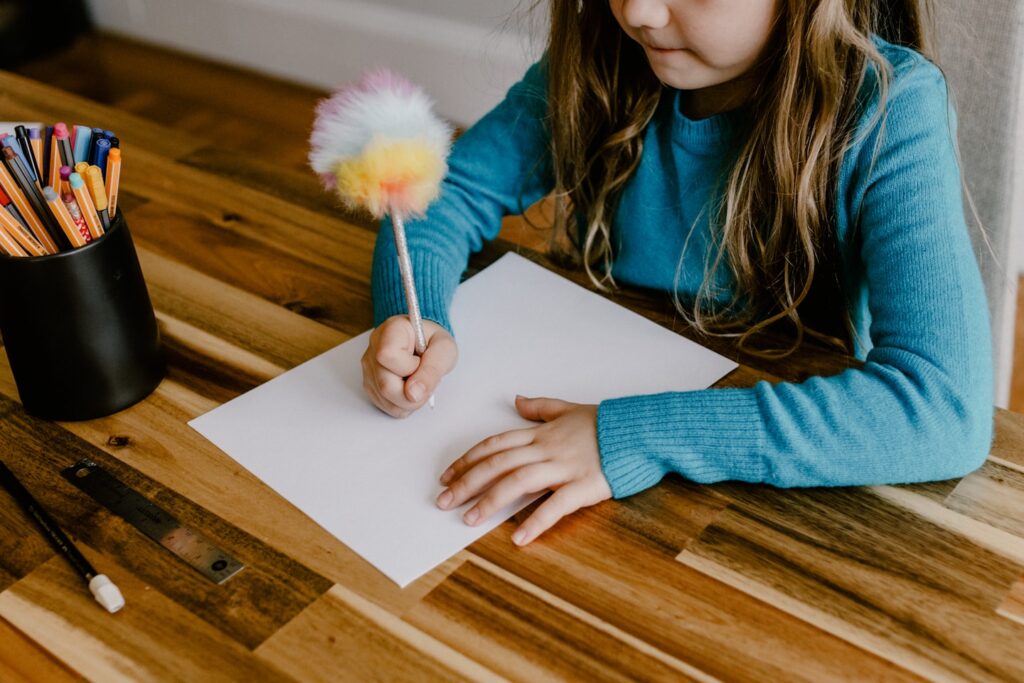
One of the biggest misconceptions about creative writing prompts is that they are only useful for quick journal entries.
In reality, a single prompt can become a rich, multi-day learning experience.
For example, consider this prompt:
You discover a tiny hidden door inside your bedroom wall. Where does it lead?
A child could simply write one paragraph—or they could:
- Sketch the hidden world they discover.
- Create a map of the new location.
- Invent characters who live there.
- Write dialogue between themselves and a new friend.
- Design creatures, buildings, or inventions.
- Research a real ecosystem and incorporate it into their story.
- Write a sequel from another character’s point of view.
One idea naturally leads to many more, helping children develop sustained creativity instead of stopping after a single page.
Helping Reluctant Writers Enjoy Writing Again
One of the most common concerns parents and teachers share is:
“My child hates writing.”
Often, children don’t actually dislike writing—they dislike the pressure they associate with it.
They may worry about:
- spelling every word correctly
- messy handwriting
- grammar mistakes
- not having the “right” answer
- running out of ideas
- being judged
Creative writing prompts reduce many of these barriers because they invite exploration rather than perfection.
Here are a few simple ways to support reluctant writers:
Let them choose.
Offering three prompt options instead of assigning one can increase engagement because children feel a sense of ownership.
Welcome drawings.
Illustrations, comic strips, diagrams, and maps are meaningful forms of creative expression that can lead naturally into writing.
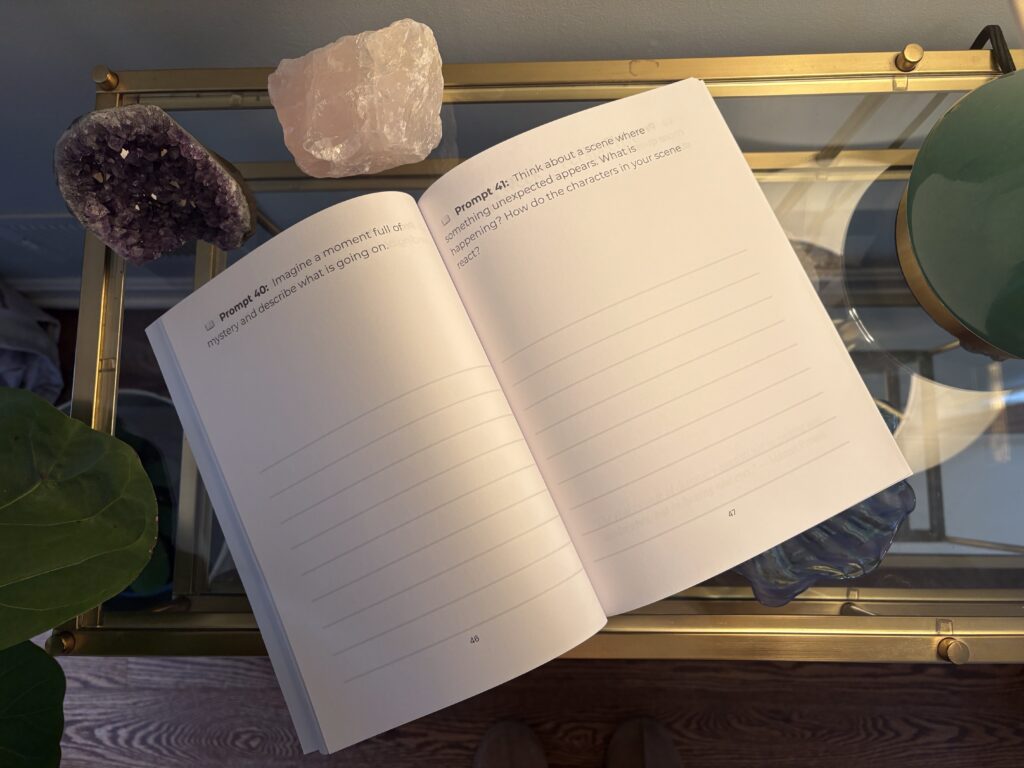
The Wonder Prompts Collection has thoughtfully designed daily journals that are generously sized for little hands and big thoughts for open-and-go daily writing.
Write alongside them.
Children are often more motivated when adults participate too. Sharing your own story shows that writing is a lifelong activity, not just a school assignment.
Wonder Prompts are perfect for multiple ages and can be used across classrooms, small groups, and homeschools of various ages and interests.
Celebrate ideas before mechanics.
During first drafts, focus on imagination and effort. Editing can come later. This helps preserve a child’s confidence and willingness to write.
Keep sessions short.
Ten focused minutes each day often produces better long-term habits than occasional hour-long writing assignments.
Creative writing prompt categories and benefits for your young writer:
| Category | Best For |
| Adventure | Imagination |
| Nature | Observation |
| Mystery | Problem solving |
| Reflection | Emotional awareness |
| Fantasy | Creativity |
| Character | Storytelling |
| Futre | Goal setting |
Creative writing helps children build…
- Creativity
- Vocabulary
- Reading comprehension
- Storytelling
- Observation
- Communication
- Confidence
- Critical thinking
- Empathy
- Organization
- Executive function
- Self-expression
Creative Writing Prompts by Age and Grade Level
One of the strengths of open-ended prompts is their flexibility. The same prompt can be adapted for different ages by changing the expected level of detail.
Kindergarten–2nd Grade (5-8)
Young children can:
- dictate stories to an adult
- draw detailed illustrations
- label pictures
- write simple sentences
- tell oral stories
The emphasis is on imagination and expression rather than length.
Grades 3–5 (8-11)
Elementary students can begin developing:
- complete narratives
- descriptive language
- dialogue
- character development
- sequencing
- richer vocabulary
Many children at this stage enjoy expanding one prompt into several pages over multiple days.
Grades 6–8 (11-14)
Older students can explore:
- multiple perspectives
- plot twists
- symbolism
- theme
- conflict
- deeper emotional development
- complex character motivations
The same prompt can become a polished short story, reflective essay, or even the beginning of a novel.
How to Use Creative Writing Prompts in Homeschool
Creative writing fits naturally into nearly every homeschool style.
Families using:
- Charlotte Mason
- Classical education
- Eclectic homeschooling
- Unit studies
- Project-based learning
- Interest-led learning
can all incorporate creative prompts with very little preparation.
Many homeschool families enjoy using writing prompts during Morning Time, after nature walks, alongside history studies, or as a gentle transition into language arts.
Another benefit is flexibility. Some children may write every response, while others prefer dictation, illustration, storytelling, or collaborative family discussions before putting ideas on paper.
The goal is not simply to complete a writing assignment—it is to cultivate curiosity, confidence, and a lifelong habit of creative expression.
Absolutely! Before we dive in, one suggestion: Part 3 should end with a compelling call to action and a polished FAQ, but I’d actually make it even stronger by adding a “Why Wonder Works” section that ties together creativity, curiosity, and confidence. That’s what will make this article feel like Wonder Prompts, not just another list of prompts.
Helping Children Build a Lifelong Writing Habit
One of the greatest gifts we can give children isn’t simply the ability to write—it’s the desire to write.
When writing becomes part of a child’s daily rhythm rather than an occasional assignment, something remarkable begins to happen. Children stop asking, “What should I write?” and start looking for ideas everywhere they go.
They notice unusual clouds on a morning walk.
They wonder what birds are saying to one another.
They imagine where a hidden trail might lead.
They invent stories while waiting in the grocery line.
They begin seeing the world through the eyes of a storyteller.
That shift—from writing because they have to toward writing because they want to—is where lasting growth begins.
Creative writing doesn’t require hours each day. In fact, consistency matters far more than duration. Even ten or fifteen minutes of thoughtful writing several times a week can help children become more comfortable expressing themselves, organizing ideas, and enjoying the creative process.
Rather than focusing on finishing pages, consider focusing on building a habit. A child who enjoys writing today is far more likely to become a confident writer tomorrow.
What the Research Shows: Why Creative Writing Works
Research suggests regular writing practice can support:
- stronger vocabulary
- better reading comprehension
- organization of ideas
- narrative thinking
- creative problem solving
- confidence
Creative writing also encourages intrinsic motivation because children have meaningful choices about what they create rather than simply completing predetermined assignments.
Simple Creative Writing Routines That Actually Work
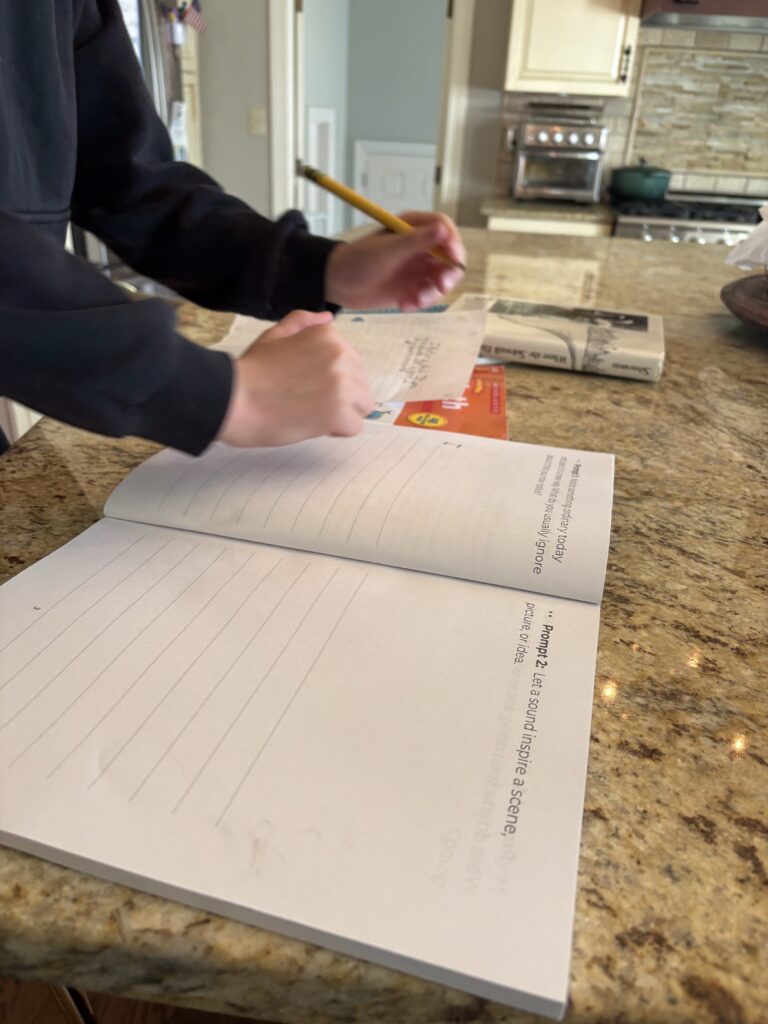
One reason writing routines fail is because they’re too complicated.
Children don’t need elaborate lessons every day. They need a predictable rhythm that feels manageable.
Here are a few approaches families and teachers often find successful.
The 10-Minute Wonder
Choose one prompt.
Set a timer for ten minutes.
Invite children to simply keep writing until the timer ends.
If they finish their story early, encourage them to add dialogue, richer descriptions, or an illustration.
The goal isn’t perfection—it’s momentum.
Prompt, Sketch, Write
Some children think best with a pencil before they think with words.
Try this sequence:
- Read the prompt.
- Spend five minutes drawing the scene.
- Label important details.
- Write about what they created.
This approach works especially well for younger learners and visual thinkers.
Family Storytelling Night
Choose one prompt.
Have every family member respond.
Read your stories aloud.
Children quickly discover that one simple question can produce completely different stories, and hearing others’ ideas often inspires future writing.
Nature + Writing
After a walk outside, choose a prompt connected to what you observed.
For example:
- If this tree could tell its life story, what would it say?
- Imagine being the smallest creature you saw today.
- What adventure might begin with the feather you found?
Combining observation with imagination strengthens both descriptive writing and curiosity.
📝 What Makes a Good Creative Writing Prompt❔
A great creative writing prompt is:
✏️ Open-ended
✏️ Age-appropriate
✏️ Imaginative
✏️ Specific enough to spark ideas
✏️ Flexible enough for many different answers
Creative Writing Across the Curriculum
Creative writing doesn’t have to stay inside language arts.
In fact, some of the richest writing happens when children connect writing with other subjects.
Science
After learning about the solar system:
Imagine you’re the first child to live on Mars. Write a journal entry about your first week.
After studying ecosystems:
Tell the story of a honeybee during its busiest day.
History
Instead of simply memorizing dates:
Write a diary entry from the perspective of a child living during the American Revolution.
Or:
Imagine discovering a mysterious trunk buried beneath an old schoolhouse. What historical objects are inside?
Geography
After studying a country:
Describe your first day visiting that place.
What surprised you?
What did you hear?
What foods did you try?
Art
Choose a famous painting.
Ask:
What happened five minutes before this scene?
Or:
What happens after everyone leaves?
Nature Study
Charlotte Mason encouraged careful observation before expression.
After spending time outdoors, children might write:
- poems
- stories
- field journal entries
- fictional adventures
- letters from an animal’s perspective
Writing becomes another way of paying attention.
Why Open-Ended Writing Builds Better Thinkers
One of the greatest strengths of open-ended writing is that it encourages thinking before answering.
Instead of searching for the correct response, children begin asking themselves:
- What do I notice?
- What do I wonder?
- What could happen?
- Why might someone think differently?
- What details would make this story feel real?
Those habits extend far beyond writing.
Children who regularly practice curiosity often become more confident learners because they become comfortable exploring uncertainty rather than fearing it.
In many ways, creative writing teaches children how to think, not simply what to write.
Why Wonder Works
At Wonder Prompts Collection, we believe that curiosity is one of childhood’s greatest strengths.
Children are naturally wired to ask questions.
Why?
How?
What if?
Instead of rushing to answer every question, we believe there is tremendous value in creating space for children to wonder.
Wonder leads to observation.
Observation leads to imagination.
Imagination leads to creativity.
Creativity leads to expression.
Expression leads to confidence.
Confidence encourages children to keep wondering.
It becomes a beautiful cycle that supports learning across every subject—not only language arts.
This philosophy shapes every WonderPrompts journal.
Rather than overwhelming children with long assignments or rigid expectations, each journal gently invites them to notice, imagine, reflect, express, and connect ideas through consistent, approachable daily prompts.
Our hope isn’t simply that children become stronger writers.
Our hope is that they become lifelong learners who remain curious about the world around them.
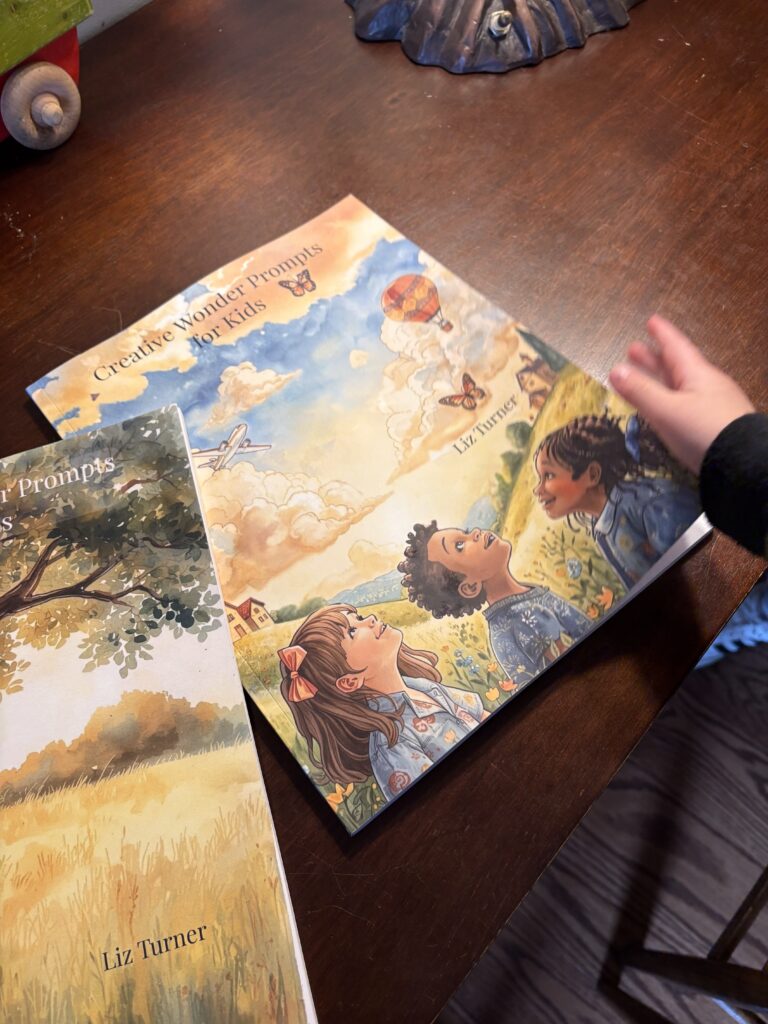
Why Creative WonderPrompts Are Different
There are countless lists of writing prompts available online.
Many are wonderful starting points.
But a list of prompts and a thoughtfully designed writing experience are not the same thing.
The Creative WonderPrompts for Kids writing journal was created to help children build a lasting creative habit through intentional structure.
Across thirteen weeks, children explore themes such as:
- Observation
- Imagination
- Storytelling
- Nature
- Emotion
- Creative expression
Each week follows a consistent daily rhythm:
- Notice
- Imagine
- Describe
- Tell a story
- Reflect
- Express
- Integrate
Instead of wondering what to write next, children gradually develop confidence through repetition, variety, and gentle guidance.
The journal is available as:
- Keepsake-quality hardcover
- Large child-friendly softcover
- Instant PDF download
- Individual license
- Classroom and homeschool licensing
Whether you’re teaching one child or thirty, the structure makes it easy to incorporate meaningful writing into your routine.
Creative Writing Prompts for Elementary and Middle School: Perfect for Homeschool Families, Teachers, and Schools
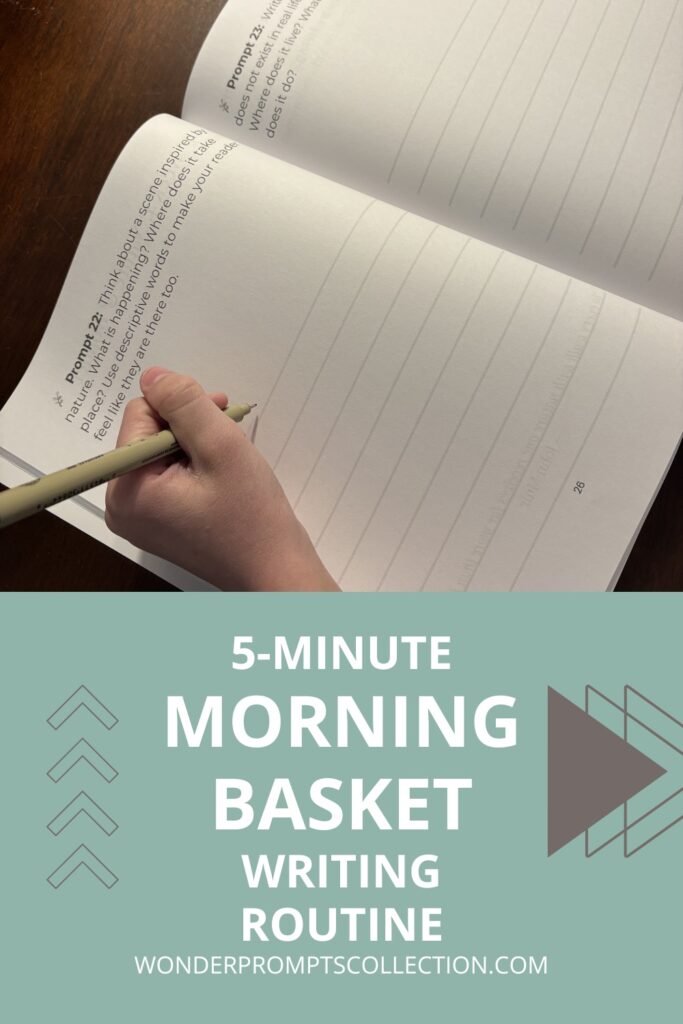
Creative WonderPrompts Journals, perfect for morning baskets or anytime you need a quick 10-minute writing prompt for kids, are designed to fit naturally into a variety of learning environments, including:
- Homeschool families
- Public schools
- Private schools
- Classical education
- Charlotte Mason-inspired learning
- Montessori environments
- Microschools
- Homeschool co-ops
- Tutoring programs
- Library programs
- After-school enrichment
- Summer learning
- Gifted education
- Mixed-age family learning
Because prompts are open-ended, children of different ages can often respond to the same prompt at their own developmental level.
Bulk Orders and Classroom Licensing
If you’re an educator, school administrator, homeschool co-op leader, library, or educational organization, Creative WonderPrompts is also available for bulk purchasing and classroom licensing.
Whether you’re ordering journals for an entire class or looking for downloadable resources for multiple students, we offer significant discounts for qualifying educational groups.
To learn more or request custom pricing, complete our bulk order inquiry form:
https://form.jotform.com/Wonder_Prompts/organization-bulk-order-form
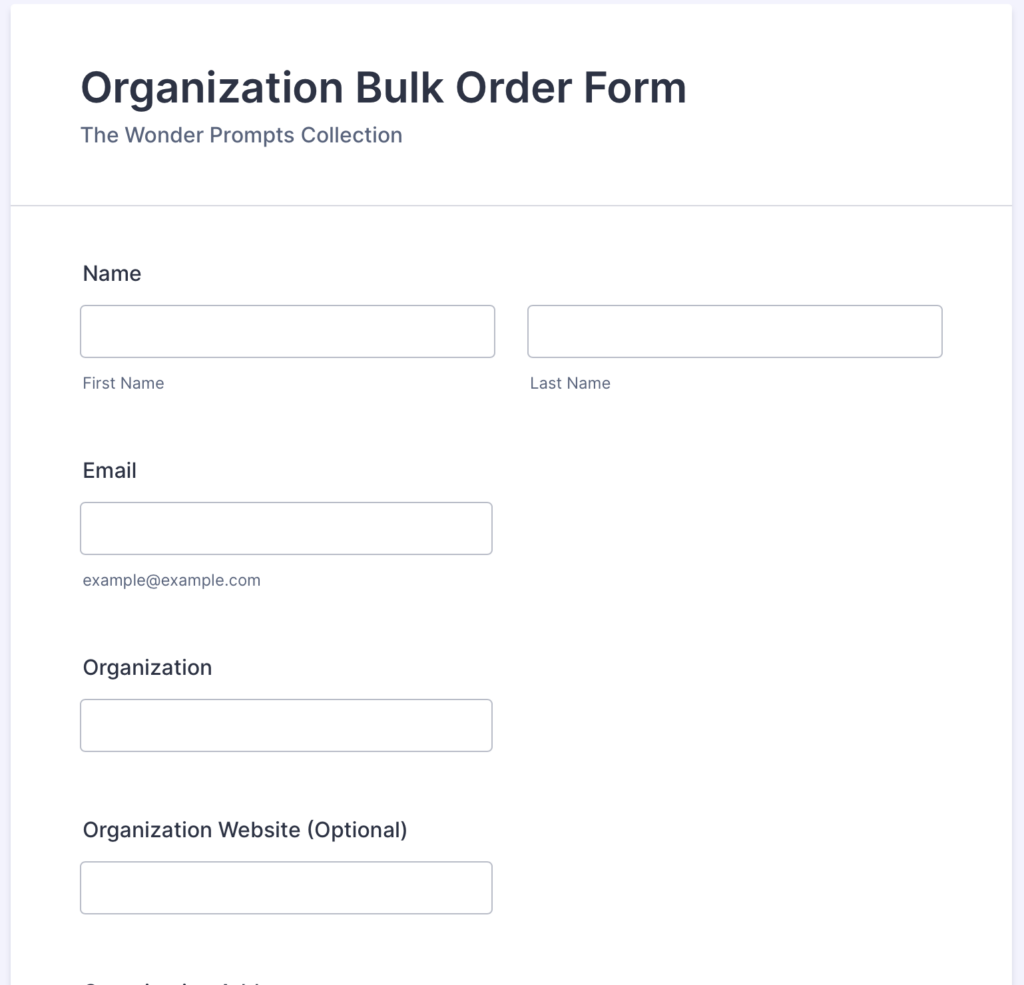
We’d love to help bring thoughtful, engaging writing experiences to your students.
Continue the Journey with Philosophical WonderPrompts
Creative storytelling and philosophical thinking complement one another beautifully.
Once children begin asking imaginative questions through creative writing, many are ready to explore life’s bigger questions:
- What makes someone a good friend?
- How do we know something is true?
- What makes us who we are?
- Can two people disagree and both learn something?
Our companion journal, Philosophical WonderPrompts for Kids, invites children to explore these ideas through age-appropriate daily writing and reflection.
Read our companion guide:
50 Philosophical Writing Prompts for Kids That Build Critical Thinking, Wonder, and Creativity
Frequently Asked Questions
What are creative writing prompts?
Creative writing prompts are open-ended questions or story starters that encourage children to imagine, describe, reflect, and tell original stories. They help build creativity, communication skills, vocabulary, confidence, and a lifelong love of writing.
What age are these writing prompts designed for?
Most prompts work well for children between approximately ages 6 and 14, but they can easily be adapted for younger or older learners. Younger children may draw or dictate their responses, while older students can develop longer stories and richer descriptions.
Are these prompts appropriate for elementary students?
Yes. Many of the prompts were designed specifically with elementary-aged children in mind while remaining engaging enough for middle school students.
Can middle school students use these prompts too?
Absolutely. Older students often expand these prompts into longer stories, essays, creative nonfiction pieces, or multi-day writing projects.
How often should children practice creative writing?
Even ten to fifteen minutes several times each week can help children build confidence and develop a sustainable writing habit.
My child says they hate writing. Will this help?
Many reluctant writers don’t actually dislike writing—they dislike the pressure of writing. Open-ended prompts reduce that pressure by giving children permission to explore ideas without worrying about finding one correct answer.
Can creative writing improve reading skills?
Reading and writing support one another. As children practice organizing ideas, describing settings, and developing stories, they also strengthen many of the comprehension and language skills used while reading.
Can siblings use the same prompt?
Yes. One of the strengths of open-ended prompts is that children of different ages can respond to the same question in completely different ways.
Are these prompts printable?
The prompts in this article are free to enjoy. If you’re looking for a beautifully designed, print-ready experience with a guided thirteen-week progression, Creative Wonder Prompts is available as a hardcover, softcover, and instant PDF download.
What’s included in Creative Wonder Prompts?
Creative WonderPrompts includes thirteen weeks of thoughtfully sequenced writing experiences centered around observation, imagination, storytelling, reflection, and creative expression. Each week follows a consistent rhythm that helps children build confidence while making writing feel enjoyable.
Is Creative Wonder Prompts a curriculum?
It can certainly complement your language arts curriculum, but it’s designed to be flexible enough for homeschool, classrooms, family learning, enrichment, summer writing, or independent journaling.
Do you offer classroom licenses?
Yes. We offer digital licensing, bulk physical orders, and educational discounts for schools, homeschool co-ops, churches, tutoring centers, libraries, and other educational organizations.
Where can I purchase Creative Wonder Prompts?
Creative WonderPrompts is available as a keepsake hardcover, a large-format softcover, and an instant digital PDF.
Visit WonderPromptsCollection.com to explore all available formats and learn more about classroom licensing and bulk discounts.
What age are these creative writing prompts best for?
Most prompts are well suited for children ages 6–14, though they can easily be adapted. Younger children may dictate stories or draw their ideas, while older students can develop longer narratives and more complex characters.

How often should children practice creative writing?
Consistency matters more than length. Even 10–15 minutes several times a week can help children build confidence, strengthen vocabulary, and develop a sustainable writing habit.
Are creative writing prompts appropriate for reluctant writers?
Yes. Open-ended prompts remove the pressure of finding the “right” answer, making writing feel more inviting and enjoyable. Children can also respond through drawing, storytelling, or dictation before transitioning to written work.
Can teachers use these creative writing prompts in a classroom?
Absolutely. They work well for morning work, literacy centers, writing workshops, morning baskets, bell ringers, substitute plans, early finishers, enrichment activities, independent writing, and homeschool co-ops. Can teachers use these prompts in classrooms?
What are creative writing prompts?
Creative writing prompts are open-ended questions or story starters that encourage children to imagine, describe, reflect, and tell original stories. They help build creativity, communication skills, vocabulary, confidence, and a lifelong love of writing.
Are these prompts appropriate for elementary students?
Yes. Many of the prompts were designed specifically with elementary-aged children in mind while remaining engaging enough for middle school students.
Can middle school students use these prompts too?
Absolutely. Older students often expand these prompts into longer stories, essays, creative nonfiction pieces, or multi-day writing projects.
My child says they hate writing. Will this help?
Many reluctant writers don’t actually dislike writing—they dislike the pressure of writing. Open-ended prompts reduce that pressure by giving children permission to explore ideas without worrying about finding one correct answer.
Can creative writing improve reading skills?
Reading and writing support one another. As children practice organizing ideas, describing settings, and developing stories, they also strengthen many of the comprehension and language skills used while reading.
Can siblings use the same prompt?
Yes. One of the strengths of open-ended prompts is that children of different ages can respond to the same question in completely different ways.
Are these prompts printable?
The prompts in this article are free to enjoy. If you’re looking for a beautifully designed, print-ready experience with a guided thirteen-week progression, Creative WonderPrompts is available as a hardcover, softcover, and instant PDF download.
What’s included in Creative WonderPrompts?
Creative WonderPrompts includes thirteen weeks of thoughtfully sequenced writing experiences centered around observation, imagination, storytelling, reflection, and creative expression. Each week follows a consistent rhythm that helps children build confidence while making writing feel enjoyable.
Is Creative WonderPrompts a curriculum?
It can certainly complement your language arts curriculum, but it’s designed to be flexible enough for homeschool, classrooms, family learning, enrichment, summer writing, or independent journaling.
Do you offer classroom licenses?
Yes. We offer digital licensing, bulk physical orders, and educational discounts for schools, homeschool co-ops, churches, tutoring centers, libraries, and other educational organizations.
Where can I purchase Creative WonderPrompts?
Creative WonderPrompts is available as a keepsake hardcover, a large-format softcover, and an instant digital PDF.
Visit WonderPromptsCollection.com to explore all available formats and learn more about classroom licensing and bulk discounts.
Note: Bulk discounts on both classroom-copy printed journals and digital download licensing are available. Find out more about how to provide Wonder Prompts to your classroom (or homeschool) by filling out the request here. We will be in touch.
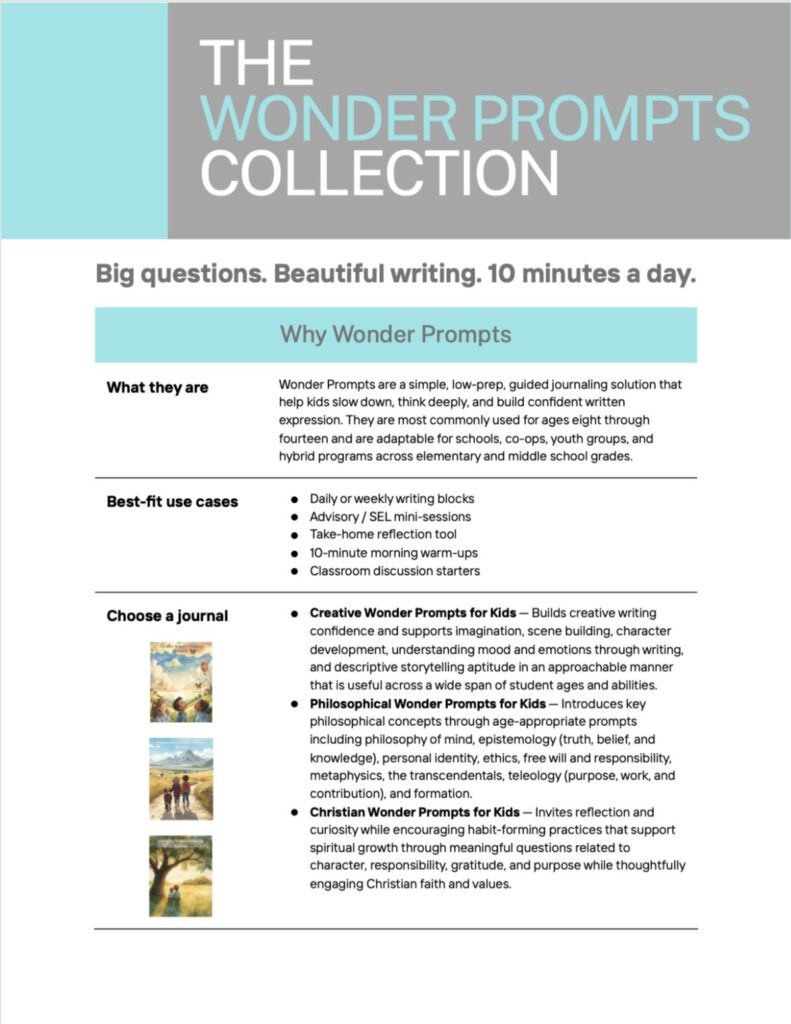
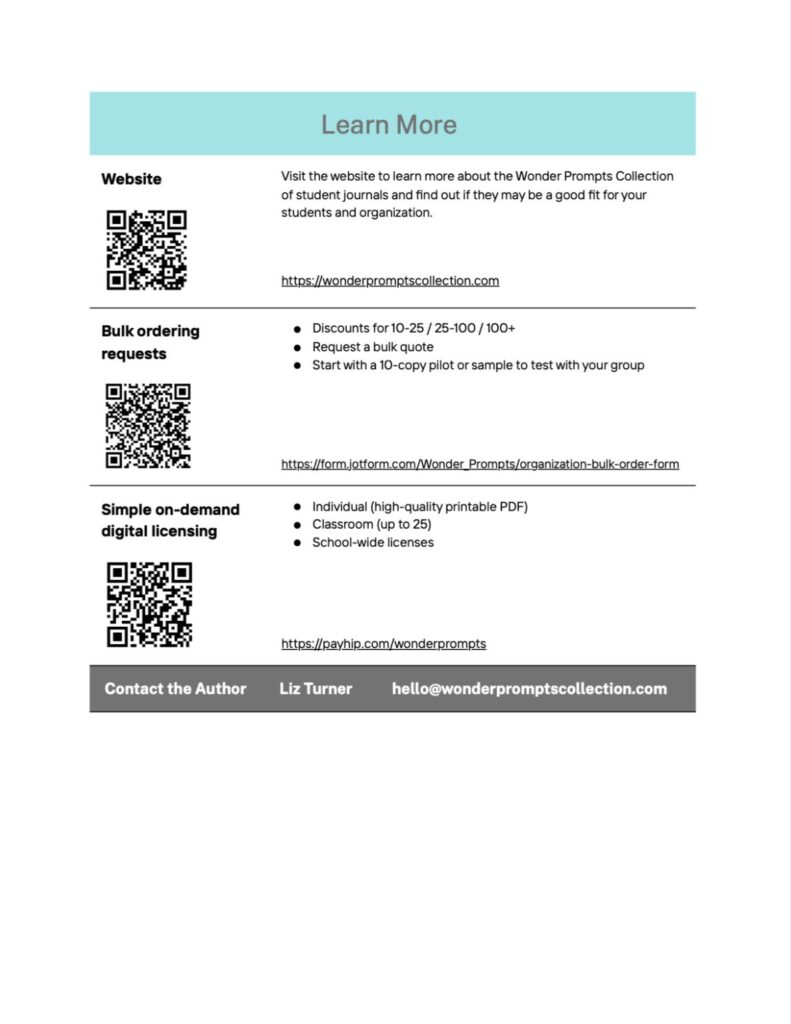
How is Creative WonderPrompts different from free writing prompt lists?
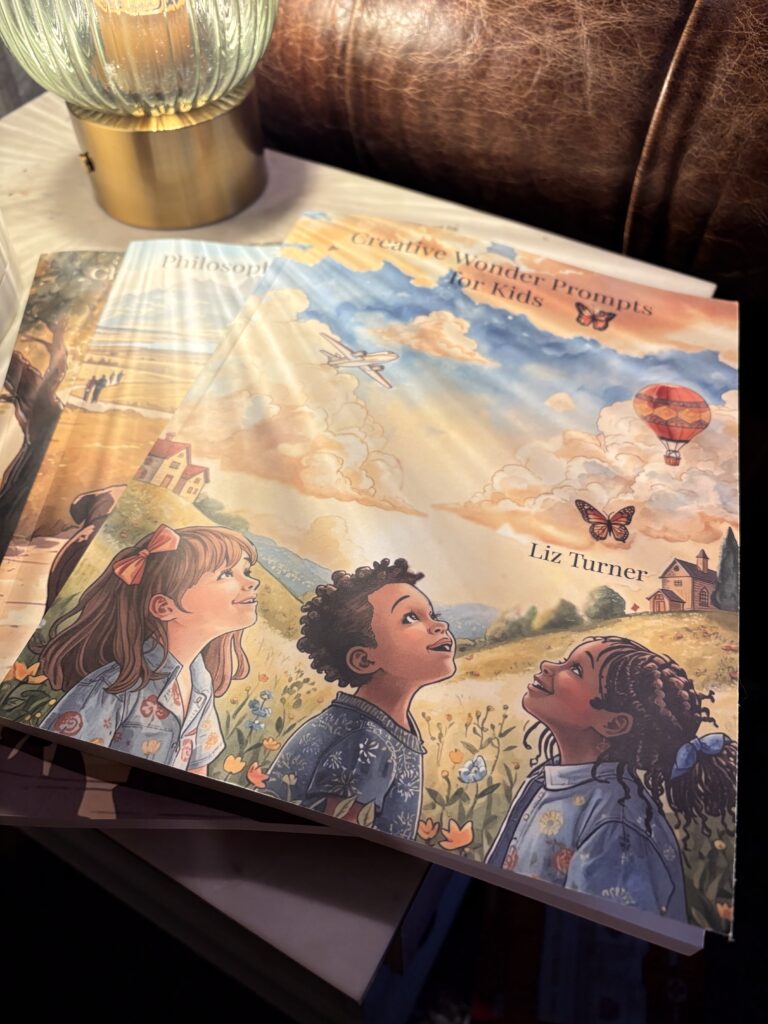
While free prompt lists provide ideas, Creative WonderPrompts offers a thoughtfully sequenced 13-week guided experience. Children move through weekly creative themes and a consistent daily rhythm that helps transform occasional writing into a meaningful habit. The journals are beautifully designed in a larger, letter-sized format with widely-spaced lines and blank space to invite both written and drawn response.
Where can I purchase Creative WonderPrompts?
Creative WonderPrompts for Kids is available as a keepsake-quality hardcover, a large child-friendly softcover, and an instant PDF download.
You can explore all available formats here:
Continue Exploring Wonder
Readers who enjoyed this article also love:
Writing Prompts for Reluctant Writers
50 Philosophical Writing Prompts for Kids
50 Christian Writing Prompts for Kids
Explore the Wonder Prompts Collection
Start Inspiring Wonder Today
Every great story begins with a single idea.
Every inventor, artist, scientist, entrepreneur, and author was once a child who asked, “What if?”
At Wonder Prompts Collection, we believe those moments of curiosity deserve to be nurtured.
Our goal isn’t simply to help children fill pages—it is to help them notice more, imagine boldly, think deeply, and discover the joy of expressing their ideas.
Whether your child writes one paragraph or ten pages, today’s small act of wondering may become tomorrow’s lifelong love of learning.
Ready to help your child build confidence through creativity?
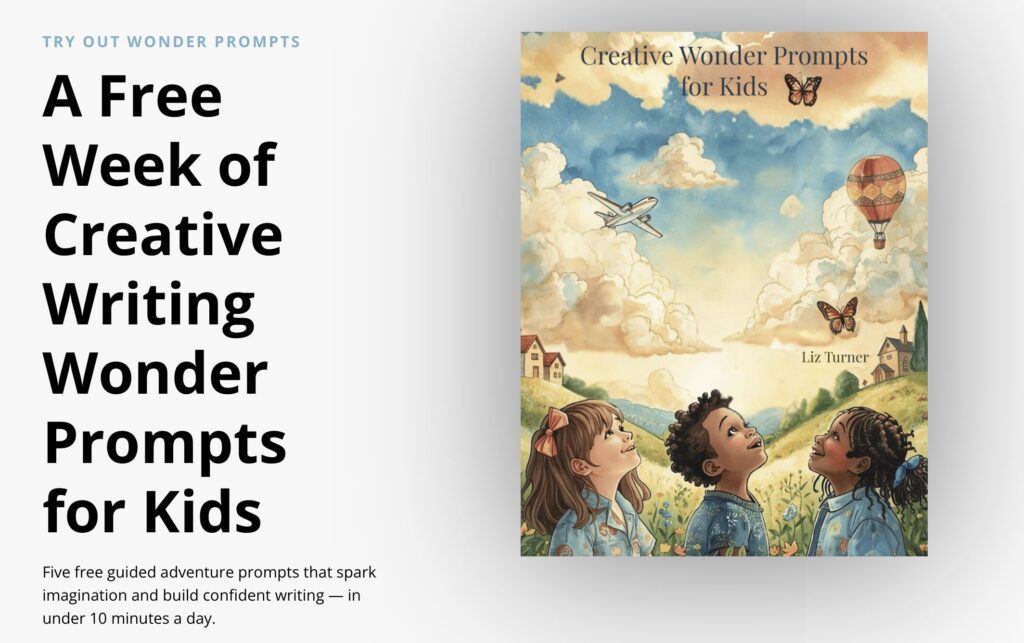
Explore Creative WonderPrompts for Kids for just $12.99, available in hardcover, softcover, or instant PDF, and discover a gentle, engaging way to make writing something children look forward to—one thoughtful prompt at a time.
From the Author’s Desk
Hi, I’m Liz. I’m a mom, educator, entrepreneur, and the creator of Wonder Prompts Collection. I believe curiosity is one of childhood’s greatest gifts, and I’m passionate about helping children grow into thoughtful, creative, and confident learners.
If there’s one thing I’ve learned from raising children, it’s that they don’t need to be taught how to wonder.
They’re already experts.
They ask the questions adults have forgotten to ask. They notice tiny details we walk past every day. They imagine impossible worlds, tell remarkable stories, and see possibility where the rest of us see ordinary.
Somewhere along the way, though, many children begin to believe that learning is mostly about getting the right answer.
I created Wonder Prompts Collection because I wanted to make room for something different.
A place where curiosity is celebrated. Where creativity isn’t graded. Where thoughtful questions matter just as much as thoughtful answers. Where children can slow down, notice the world around them, express their ideas with confidence, and discover that their voice has value.
Whether your child writes a single sentence, fills every page, sketches pictures instead of paragraphs, or simply starts a meaningful conversation, that’s a wonderful place to begin.
My hope is that these prompts become more than a writing activity. I hope they become part of your family’s rhythm—a reason to pause, laugh, imagine, reflect, and grow together.
Thank you for inviting Wonder Prompts into your home or classroom. It is a privilege to be a small part of your child’s learning journey.
Here’s to raising curious thinkers, confident writers, and lifelong learners—one thoughtful prompt at a time.
With gratitude,
Liz Turner
Founder, Wonder Prompts Collection

Leave a Reply