without tears, worksheets, or resistance.
If you’re wondering how to teach writing in homeschool, you’re not alone.
Many homeschool parents discover that teaching writing can feel surprisingly difficult — even with a full language arts curriculum.
If you homeschool long enough, you eventually run into the same problem.
Your child reads well.
They understand stories.
They have wonderful ideas.
But when you ask them to write… everything stops.
They stare at the page.
They say they don’t know what to write.
Or they give you one short sentence and feel finished.
If you’ve experienced this, you are not alone.
I’m a homeschool mom myself, and teaching writing has been one of the most surprising challenges in our home. Not because my children lacked ideas — but because translating those ideas onto the page felt overwhelming.
And the more I talked to other homeschool families, the more I realized something: many writing programs unintentionally make writing harder than it needs to be.
How Writing Used to Be Learned
When I think back to my own childhood education, writing felt different.
In first grade, my teacher had us create our own books. We wrote stories, illustrated them by hand, and then bound them together. I can still remember the excitement of seeing my own writing turned into something tangible.
By third grade we were writing descriptive paragraphs and learning the structure of essays. By middle school, research papers felt challenging — but not frightening — because writing had already become familiar.
Writing was simply something we did every day.
Because of that repetition, I grew comfortable explaining my thoughts on paper. My writing improved gradually, almost without me noticing.
And that’s the key.
Writing confidence grows from familiarity.
Why Many Children Struggle With Writing Today
Today, many children are still learning to write — but the environment has changed.
Parents and teachers often tell me they see:
• less sustained writing practice
• more short-form responses
• more focus on test preparation
• fewer opportunities for thoughtful narration
Children may complete worksheets or answer quick questions, but they have fewer chances to practice organizing ideas into full explanations.
And writing is a skill that only develops through practice.
When children rarely write paragraphs, paragraphs feel intimidating.
What I Discovered as a Homeschool Mom
When I began homeschooling, I assumed a complete language arts curriculum would naturally include daily writing.
But something was missing.
Many programs included grammar, spelling, and occasional compositions — but not consistent, engaging daily prompts that actually encouraged children to write more.
What I wanted was simple:
Something open-and-go.
Something thoughtful.
Something that helped my children think deeply and respond naturally.
Most importantly, I wanted a way to teach writing in homeschool in a way that didn’t feel like busywork.
The Classical Education Connection
If you explore classical education traditions — especially Charlotte Mason’s approach — you’ll notice something important.
Children learn writing primarily through narration and reflection.
Instead of memorizing writing formulas too early, they practice explaining ideas in their own words.
They respond to stories.
They reflect on ideas.
They describe what they observe.
This builds the most important skill of all:
the ability to form and express a complete thought.
Once children are comfortable explaining their thinking, writing structure becomes much easier.
The Power of Daily Writing Practice
After experimenting with different approaches in our homeschool, I found that the most effective method was surprisingly simple:
short, thoughtful writing every day.
Not long essays.
Not stressful assignments.
Just a few minutes of writing that encouraged my children to think and respond.
Over time, something remarkable happened.
Writing stopped feeling like an event.
It became normal.
And when writing feels normal, children begin to relax on the page.
They write longer answers.
They explain their thinking.
They begin developing real fluency.
What Makes a Good Writing Prompt
Not all prompts are equally helpful.
Some prompts invite only short answers. Others spark deeper thinking.
The most effective prompts encourage children to:
• imagine possibilities
• explain their reasoning
• describe experiences
• reflect on ideas
When prompts invite thinking, writing naturally follows.
How Wonder Prompts Was Created
The Wonder Prompts Collection grew out of this search for thoughtful, daily writing prompts that children actually enjoy.
As a homeschool mom, I wanted a tool that was:
• simple enough to use every day
• structured enough to build writing skills
• interesting enough that children want to respond
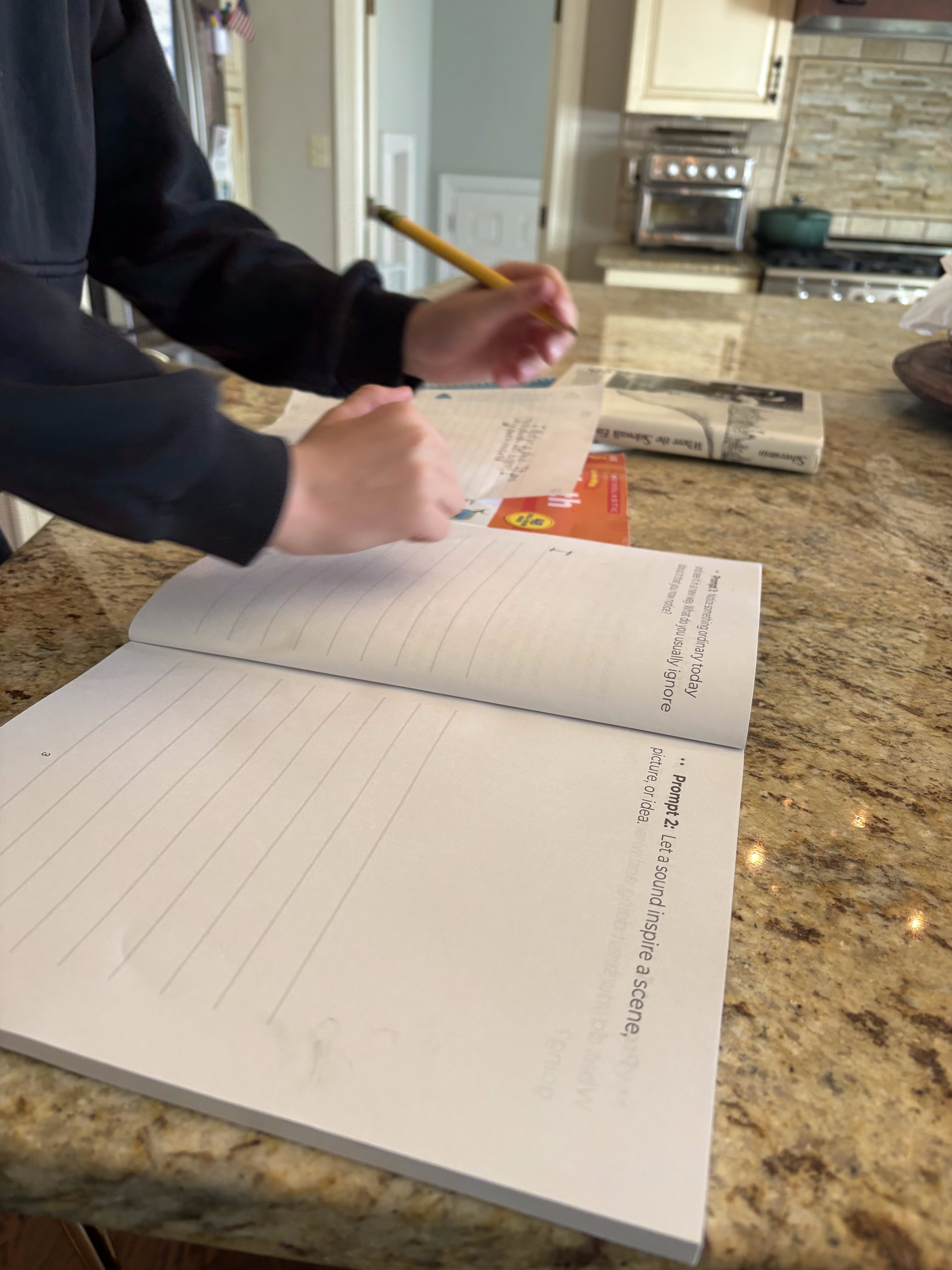
Each journal contains 90 carefully designed prompts that help children practice:
• organizing ideas
• developing paragraphs
• creative thinking
• reflective writing
• expressing opinions clearly
Most prompts take just 5–10 minutes per day, making them easy to incorporate into:
• homeschool language arts
• morning basket time
• independent work
• writing warm-ups
Why Parents and Teachers Use Wonder Prompts
Many homeschool parents search for ways to teach writing in homeschool without overwhelming their children. That’s where Wonder Prompts come in! Families appreciate that the prompts are thoughtful but simple.
Teachers appreciate that they build real writing skills without requiring extensive preparation.
And children appreciate that they are invited to think, imagine, and explain, rather than simply fill in blanks.
Over time, that daily rhythm helps writing feel natural again.
How to Teach Writing in Homeschool Without Overcomplicating It
If you’d like to see how children respond to this approach, you can start with the free 5-day writing sample.
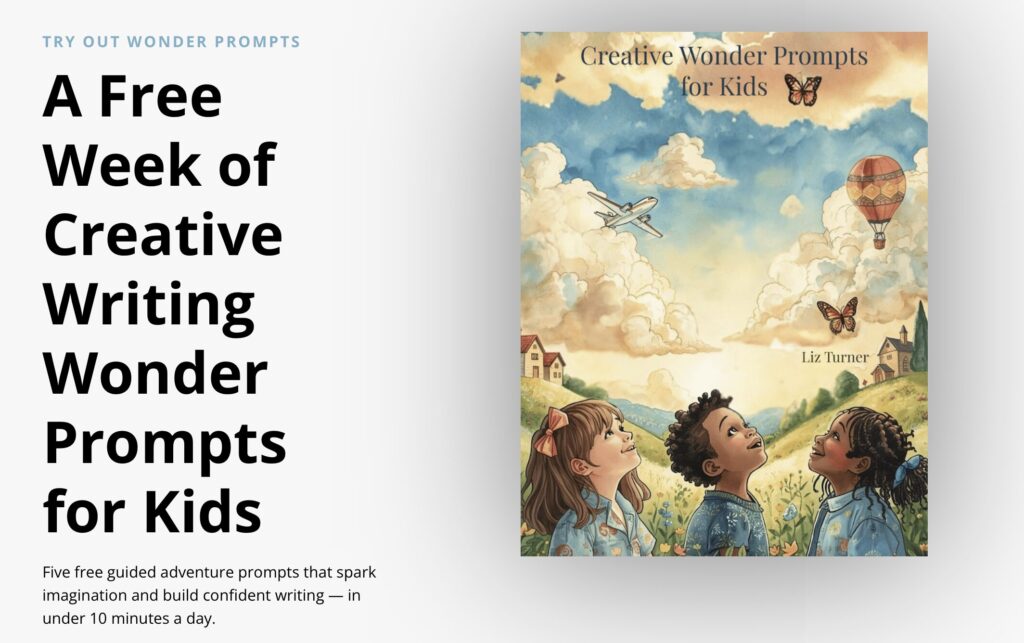
Many families find that once children begin responding to prompts regularly, writing becomes less intimidating and much more enjoyable.
From there you can explore the full collection:
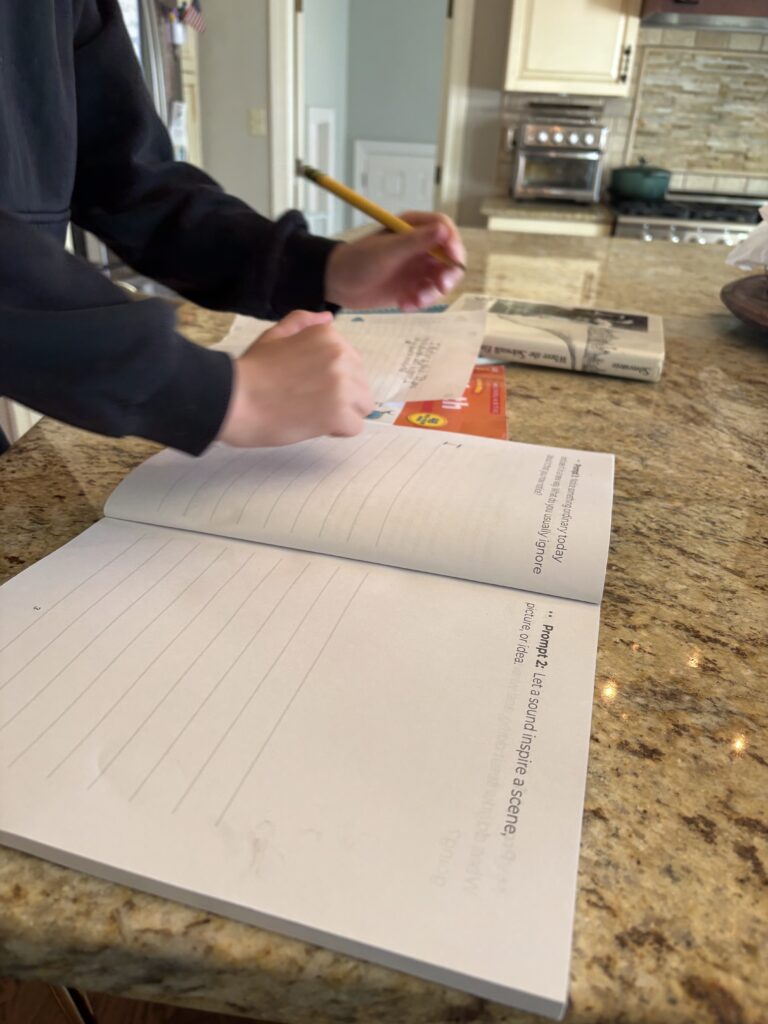
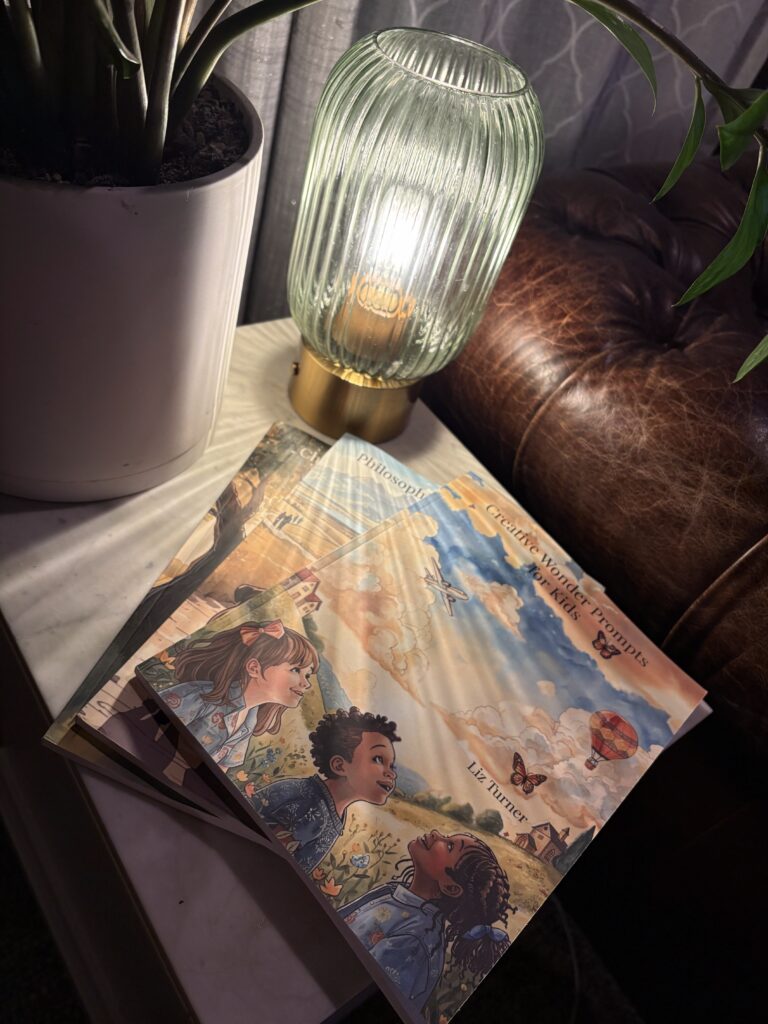
• Creative Wonder Prompts
• Philosophical Wonder Prompts
• Christian Wonder Prompts
Each journal is designed to help children develop confident, expressive writing through short daily practice.
Because strong writers are not built through occasional assignments.
They grow through small, steady moments of thoughtful writing.